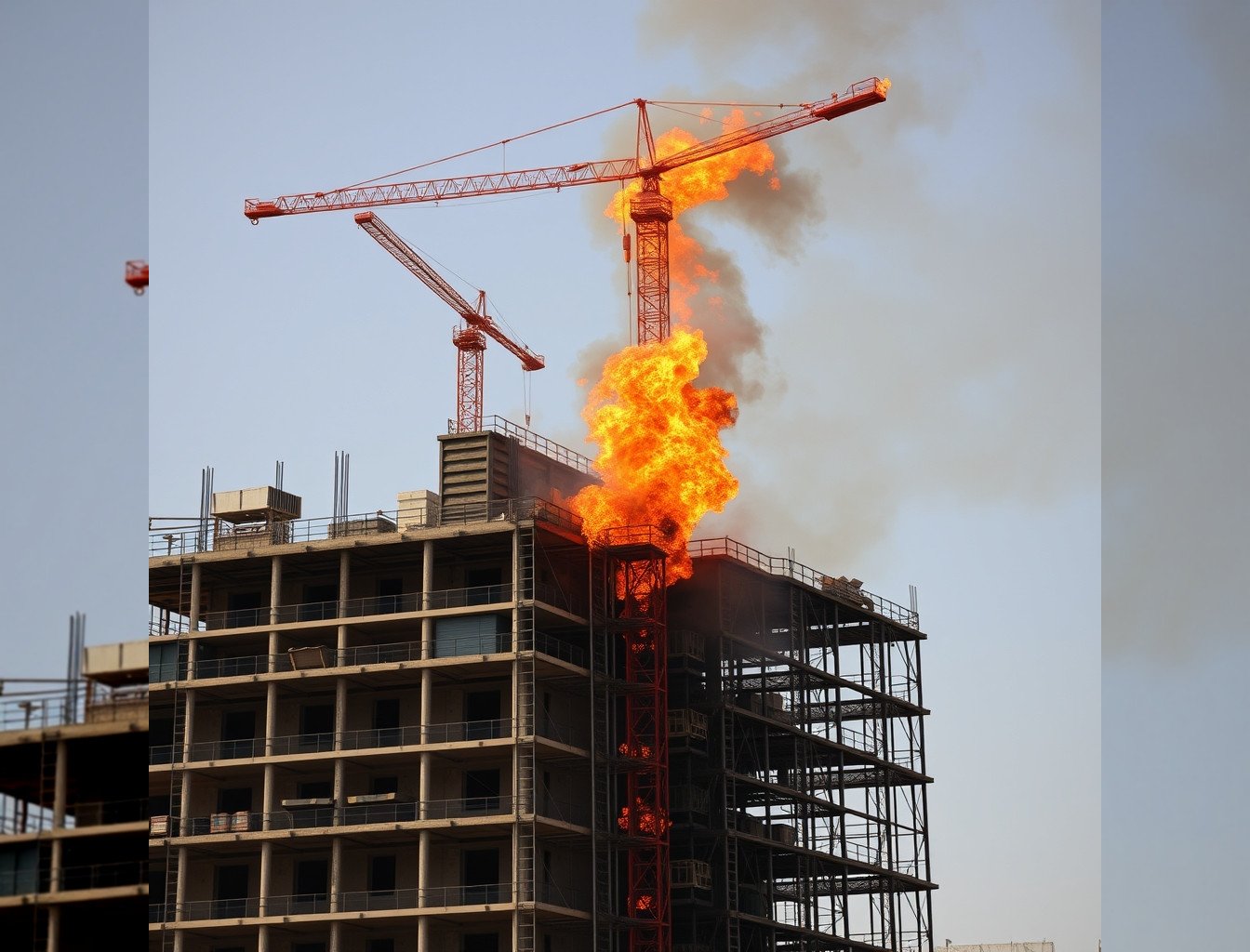
Why Algeria’s deadliest fires in a decade threaten investors—and why no one is insured
This summer’s wildfires, which killed at least 12 people across Tizi Ouzou, Béjaïa, and Boumerdès provinces, have laid bare a brutal truth: Algeria’s construction sector is ill-equipped to handle climate risks, and entrepreneurs are paying the price. While President Abdelmadjid Tebboune’s government has pledged $1.5 billion in recovery funds, the real cost—uninsured losses, disrupted supply chains, and a brain drain of skilled workers—falls on businesses and the diaspora.
The fires destroyed hundreds of hectares of forest and farmland, but the economic damage extends far beyond agriculture. Contractors in high-risk zones now face skyrocketing insurance premiums—or no coverage at all. Algeria’s insurance market, dominated by state-backed firms like Sonas, covers less than 5% of commercial properties against wildfires, according to a 2025 report by the Algerian Insurance Federation. For entrepreneurs in sectors like tourism (think Kabylie’s ski resorts) or renewable energy (solar farms in Béchar), this is a ticking time bomb.
The $1.5bn recovery fund won’t fix the insurance black hole
The government’s announced $1.5 billion in emergency aid—split between reconstruction, firefighting upgrades, and agricultural subsidies—sounds substantial. But the fine print reveals a critical flaw: none of it goes toward retrofitting buildings or expanding wildfire insurance. Without structural changes, the same risks will resurface next year.
Take the case of Mohamed B., a 34-year-old entrepreneur who runs a guesthouse in Tazmalt, a village near Béjaïa. His property survived the fires, but his insurer, Sonas, refused to renew his policy after a minor claim in 2024. “They said I was ‘high-risk,’” he told Reuters. “Now I’m paying 40% more for basic coverage—and still not enough.” His competitors in Morocco and Tunisia, where wildfire insurance is mandatory for businesses in vulnerable zones, have no such problems.
How the diaspora is betting against Algeria’s fire risks
Algerian expatriates, particularly in France and Canada, are already factoring wildfire risks into their investment decisions. A 2026 survey by the Algerian Diaspora Investment Agency (ADIA) found that 68% of potential investors cited climate-related risks as a dealbreaker for real estate or infrastructure projects in Algeria. This is bad news for sectors like renewable energy, where foreign capital is crucial.
Consider Noureddine A., a Paris-based engineer who was set to launch a $20 million solar farm in Ouargla. After this year’s fires, his French insurer, AXA, demanded a 300% premium increase—or a clause excluding wildfire damage. “Algeria is a great market, but the lack of risk mitigation makes it too expensive,” he said. “I’m looking at Morocco instead.” His hesitation isn’t just anecdotal: since 2025, Algerian renewable energy projects have seen a 22% drop in foreign funding, per data from the African Development Bank.
The hidden cost: supply chain disruptions and labor shortages
The fires didn’t just burn forests—they also severed key supply routes for construction materials. Béjaïa’s port, a hub for cement and steel imports, was temporarily shut down after a fire damaged nearby warehouses. Prices for reinforced concrete shot up by 15% in Algiers this month, according to the Algerian Chamber of Commerce (CAC). Small contractors, who already operate on thin margins, are now caught between rising costs and stagnant government contracts.
Meanwhile, skilled labor is fleeing. Firefighters and forestry workers—many of whom were temporary employees—have either left for better-paid jobs in the Gulf or joined the diaspora. The National Agency for Employment (ANEM) reports a 12% drop in applications for forestry-related roles since the fires, as younger Algerians prioritize stability over high-risk sectors.
What entrepreneurs can do now—before the next fire season
The window to act is closing. Here’s how businesses can protect themselves:
– Demand retrofitting incentives. The government’s $1.5 billion fund could be redirected to subsidize fire-resistant building materials (like fireproof cladding or underground water tanks). Entrepreneurs should lobby the Ministry of Public Works for tax breaks on upgrades.
– Shop for international insurance. Firms like Allianz and Chubb offer wildfire coverage for Algerian assets—at a premium, but with better terms than local insurers. The diaspora can help broker these deals.
– Diversify supply chains. Stockpile critical materials (e.g., steel, solar panels) before the next fire season. Djazaïr Export, the state trade agency, has warehouses in Oran and Annaba that can serve as backup hubs.
– Invest in early-warning tech. Startups like Deep Blue, an Algerian AI firm, already sell drone-based fire detection systems. Contractors in high-risk zones should integrate these—before insurers start penalizing them.
Key takeaway for entrepreneurs
Algeria’s wildfires aren’t just a humanitarian crisis—they’re a $1.5 billion business risk that no government fund can fully cover. Entrepreneurs in construction, energy, and tourism must act now to secure insurance, diversify supply chains, and push for policy changes. The diaspora, meanwhile, has leverage: foreign investors will only return if Algeria adopts mandatory wildfire insurance and retrofitting standards. The next fire season starts in March—time is running out.
💡 Starting a business in Algeria? GlobalStart guides you step by step: procedures, real costs, company forms (SARL, EURL, SPA) and CNRC registration.