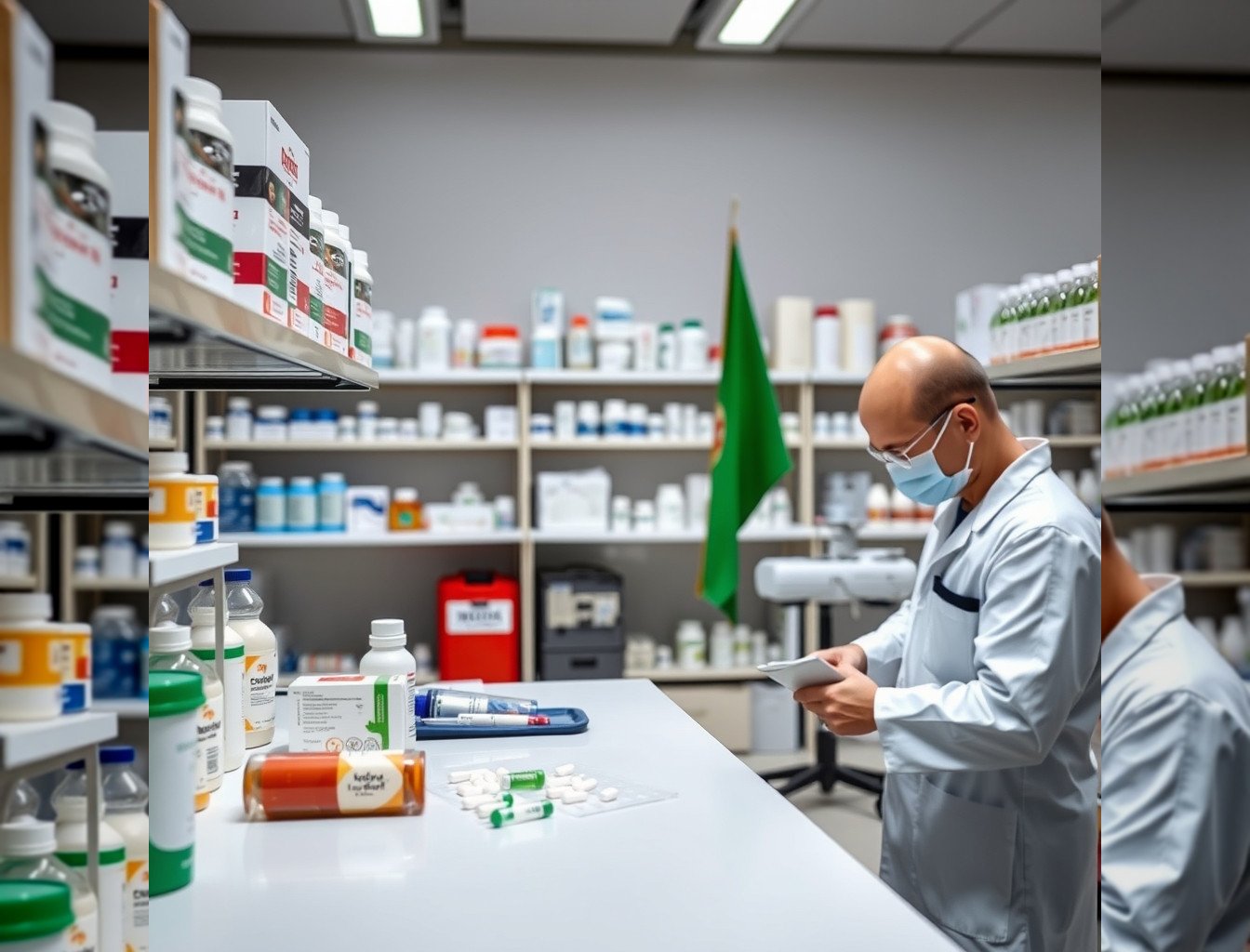
Algeria’s pharmaceutical industry is on the brink of a major breakthrough. This week, Health Minister Abdelhakim Kouidri urged local manufacturers to accelerate their participation in the World Health Organization’s (WHO) prequalification program, a stamp of approval that could open doors to lucrative global contracts worth $100 billion annually in medicines and vaccines.
The move comes as Algeria’s pharma sector—once dominated by state-run giants like SIDAL and SIPHAT—now sees private players like Pharma5 and Algeropharm pushing for international recognition. For entrepreneurs and exporters, the WHO prequalification is not just paperwork: it’s a direct ticket to supply chains that currently exclude 90% of African and Middle Eastern producers.
Why the WHO prequalification matters for Algerian exporters
The WHO’s prequalification program acts as a global trust badge for medicines, vaccines, and medical devices. Without it, Algerian firms can sell only to a handful of countries—mostly neighbors like Tunisia or Libya—where regulations are lax. With it, they can compete for contracts with UN agencies, African Union health programs, and even the African Continental Free Trade Area (AfCFTA), which aims to boost intra-African trade in pharmaceuticals by 25% by 2030.
“Right now, Algerian firms are selling to 12 countries,” said a source at the Algerian Chamber of Commerce (CCI), who requested anonymity. “With prequalification, that jumps to 50+ markets overnight.” The stakes are high: Egypt’s pharma exports—many prequalified—hit $1.2 billion in 2025, while Algeria’s stood at just $300 million, with most sales still local.
The cost of playing catch-up—and how to win
Algerian manufacturers face three major hurdles to join the WHO’s elite list of prequalified suppliers:
1. Stringent lab standards – The WHO demands GMP (Good Manufacturing Practice) certification, which requires $500,000–$1 million in upgrades for most mid-sized Algerian plants. Pharma5, Algeria’s largest private pharma group, spent $8 million in 2024 to meet these standards after its facility in Blida failed an initial audit.
2. Clinical trial data gaps – Unlike European or Indian firms, Algerian companies often lack large-scale clinical trial data on their drugs. The WHO requires proof that medicines work safely at scale—a process that can take 18–36 months and cost $2–5 million per drug.
3. Bureaucratic delays – Even approved firms hit snags. SIPHAT, Algeria’s state-owned vaccine producer, was prequalified for its COVID-19 vaccine in 2022 but saw exports stall due to customs red tape in key markets like Nigeria and Kenya.
Who’s already winning—and how they did it
A handful of Algerian firms are making progress. Algeropharm, a private company based in Constantine, became the first Algerian firm to prequalify a generic drug (metformin for diabetes) in 2025. Its CEO, Karim Benali, revealed that the breakthrough required partnering with a Swiss consultant to navigate WHO’s documentation maze—a cost of $300,000 but a fraction of the alternative: building a new factory from scratch.
Meanwhile, SIDAL, Algeria’s largest pharma group, is betting big on vaccine exports. In 2024, it signed a $15 million deal with the African Union to supply yellow fever vaccines—only possible after securing WHO prequalification for its production line in Algiers.
The diaspora’s hidden opportunity
Algerian entrepreneurs abroad—especially in France, Canada, and the UAE—are taking notice. Many in the diaspora have pharma supply chain expertise but lack local manufacturing ties. Now, they see a chance to bridge the gap.
“Algerian doctors and pharmacists in Europe have the networks,” said Dr. Leïla Hadjadj, a London-based pharmaceutical consultant. “They can help local firms navigate EU-GMP standards, which are similar to WHO’s. The diaspora isn’t just remitting money—some are investing in prequalification projects.”
One example: Algerian-Canadian investor Mohamed Benaissa co-founded PharmaLink Africa, a consultancy helping Algerian firms fast-track prequalification by connecting them with WHO-accredited labs in Morocco and South Africa. His team charges $100,000–$200,000 per client—cheaper than hiring European consultants.
The global supply chain shift favors Algeria—if it moves fast
The push for WHO prequalification comes at a perfect storm moment. Three trends are making now the best time for Algerian pharma to expand:
1. Africa’s vaccine self-sufficiency drive – The African Union’s 2025–2030 pharma strategy calls for 60% of vaccines used on the continent to be made locally. Algeria’s SIPHAT and SIDAL are positioning themselves as key suppliers—but only if they meet WHO standards.
2. Western sanctions workarounds – With U.S. and EU drug patents blocking cheaper generics, African and Middle Eastern buyers are actively seeking alternatives. Algerian firms could fill this gap—if they can prove their products are safe and effective.
3. China’s pharma dominance under scrutiny – After quality control scandals in Chinese-made drugs, countries like South Africa and Nigeria are diversifying suppliers. Algerian firms with WHO prequalification could replace Chinese imports in niche markets.
The risk of falling behind
The warning signs are clear. Morocco’s pharma exports grew 40% in 2025 after four firms gained WHO prequalification. Meanwhile, Algeria’s pharma export growth has stalled at 3% annually—far below the 15% target set by the Ministry of Industry.
“If Algeria doesn’t act now, it will lose out to Morocco, Tunisia, and even Egypt,” said Rachid Boualem, president of the Algerian Pharmaceutical Federation. “The window is open, but it won’t stay that way.”
How to start: A step-by-step guide for Algerian entrepreneurs
For business founders eyeing the global market, here’s how to leapfrog into the WHO prequalification race:
1. Pick one product to prequalify – Start with low-cost, high-demand generics (e.g., antibiotics, antimalarials, or insulin). The WHO prioritizes essential medicines for prequalification.
2. Partner with a prequalified firm – Many Algerian companies are joint-venturing with Indian or European firms (like Dr. Reddy’s or Teva) to split the $2–5 million cost of clinical trials.
3. Leverage government grants – The Algerian Development Bank (BADR) offers $1–3 million in loans for firms upgrading to GMP standards. Pharma5 used this to double its export capacity in 2024.
4. Target the AfCFTA first – The African Continental Free Trade Area has 1.3 billion consumers and zero tariffs for prequalified pharma products. SIPHAT’s vaccine deal with the AU proves the model works.
5. Use the diaspora as a force multiplier – Algerian professionals abroad can help with regulatory filings, clinical trial logistics, and market entry in Europe and the Middle East.
Key takeaway for entrepreneurs
Algeria’s pharma sector is at a crossroads: either scale up to global standards and unlock $100 billion in contracts, or stay trapped in a shrinking local market. The WHO prequalification is the fastest route to export growth, foreign investment, and job creation—but it requires speed, partnerships, and bold capital investments. Firms that act now will dominate Africa’s pharma boom; those that wait risk being outmaneuvered by competitors. The clock is ticking.
Sources
- aps.dz
💡 Starting a business in Algeria? GlobalStart guides you step by step: procedures, real costs, company forms (SARL, EURL, SPA) and CNRC registration.