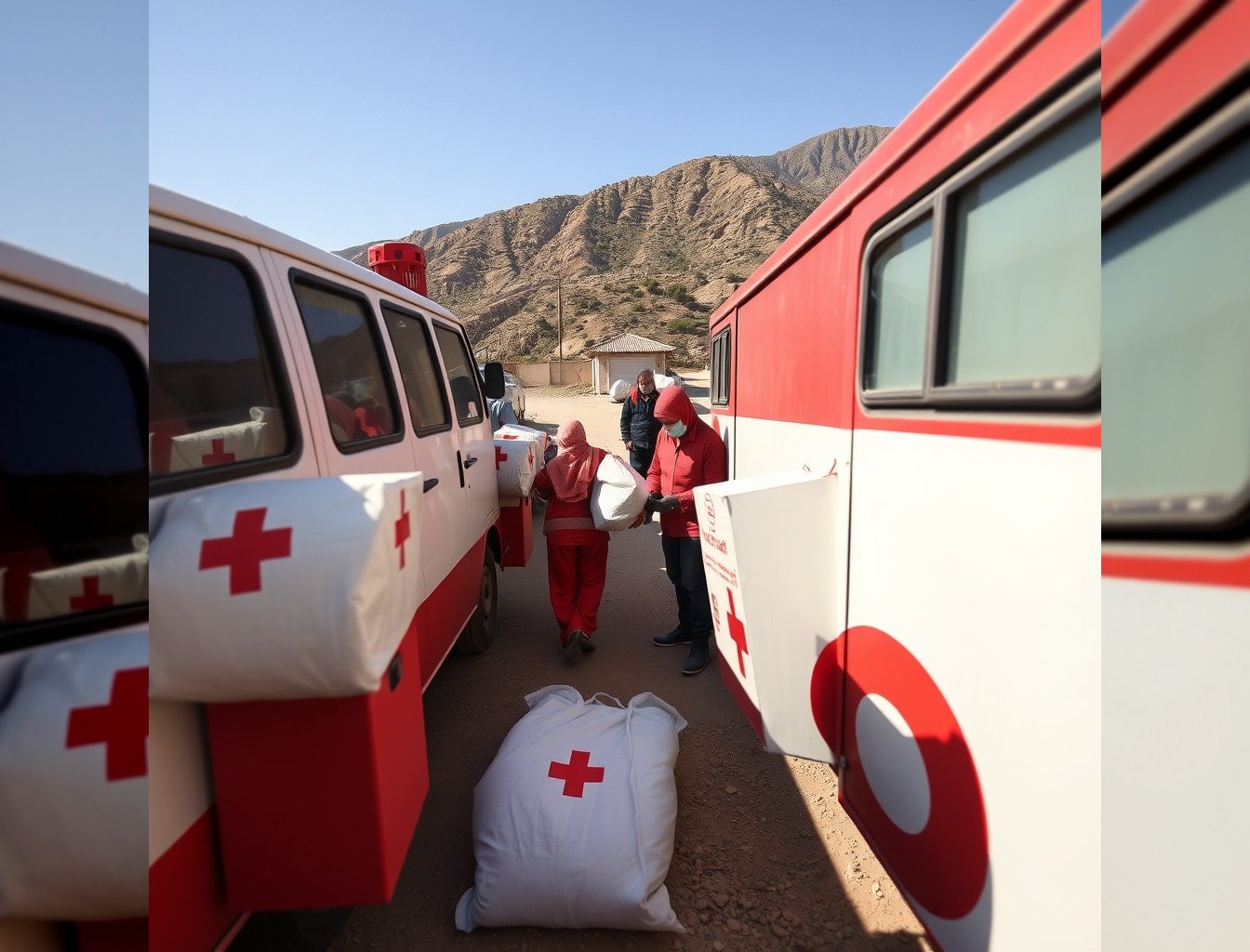
A lifeline for local businesses and displaced families
The Algerian Red Crescent (ARC) has delivered a solidarity convoy loaded with relief supplies and essential equipment to Jijel Province, where wildfires recently devastated homes and livelihoods. The move comes as a critical response to the humanitarian crisis unfolding in the region, according to a statement from the ARC released Thursday.
For entrepreneurs and small business owners in Jijel, the immediate impact of the wildfires has been severe. Many rely on local agriculture, tourism, or informal trade—sectors now disrupted by destroyed infrastructure and displaced populations. The ARC’s intervention provides not just food and medical aid but also a temporary stabilizer for communities that may otherwise face prolonged economic stagnation.
Tourism operators face uncertain recovery
Jijel’s economy depends heavily on coastal tourism, particularly in areas like the Tichy National Park and the historic town of Djenane. Wildfires have damaged key attractions, forcing closures and leaving operators with lost revenue. Without swift restoration of infrastructure—such as roads, guesthouses, and recreational sites—the sector could see long-term decline.
Entrepreneurs in hospitality must now weigh the cost of repairs against dwindling visitor numbers. The ARC’s convoy includes basic supplies to support displaced families, but longer-term aid—such as grants for rebuilding or subsidies for small businesses—will be crucial to prevent mass closures.
Agricultural losses threaten food supply chains
Jijel’s fertile plains produce olives, citrus fruits, and vegetables, supplying both local markets and regional distribution networks. Wildfires have scorched vast swathes of farmland, disrupting harvests and threatening food security. For agribusinesses and cooperatives, the loss translates to delayed payments, reduced exports, and potential shortages in urban centers like Algiers.
The ARC’s delivery of relief supplies may ease immediate pressure on food prices, but entrepreneurs in the sector will need government support to replant crops and restore supply chains. Without intervention, small-scale farmers—who make up a significant portion of Jijel’s workforce—could face bankruptcy.
Diaspora remittances may rise as families seek support
The Algerian diaspora, particularly in Europe and North America, plays a vital role in funding local recovery efforts. With wildfires displacing thousands, many families may turn to relatives abroad for financial assistance. Remittance flows could surge, but entrepreneurs should prepare for increased demand for microloans, housing solutions, and business continuity services.
For diaspora-run enterprises—such as import-export firms or digital businesses—this presents an opportunity. Partnering with local NGOs or municipal authorities to provide low-interest loans or training programs could strengthen ties with affected communities while creating new revenue streams.
Logistical challenges complicate aid distribution
While the ARC’s convoy is a positive step, distributing aid efficiently in Jijel remains difficult. Mountainous terrain, damaged roads, and limited fuel supplies hinder rapid delivery. Entrepreneurs with logistics expertise—such as trucking companies or warehouse operators—could position themselves to assist in future relief efforts, potentially securing contracts with government or humanitarian organizations.
The wildfires have also exposed gaps in Algeria’s disaster response infrastructure. Businesses specializing in emergency preparedness, insurance, or risk management may see increased demand for services that mitigate future crises.
Key takeaway for entrepreneurs
The ARC’s aid convoy highlights both the immediate humanitarian crisis in Jijel and the long-term economic risks for local businesses. Entrepreneurs should monitor government announcements for relief programs, explore partnerships with NGOs for post-disaster support, and assess how wildfire damage affects their supply chains. Those in tourism, agriculture, and logistics stand to benefit from proactive measures—whether through reconstruction contracts, diaspora investments, or innovative aid distribution models.
Sources
💡 Starting a business in Algeria? GlobalStart guides you step by step: procedures, real costs, company forms (SARL, EURL, SPA) and CNRC registration.