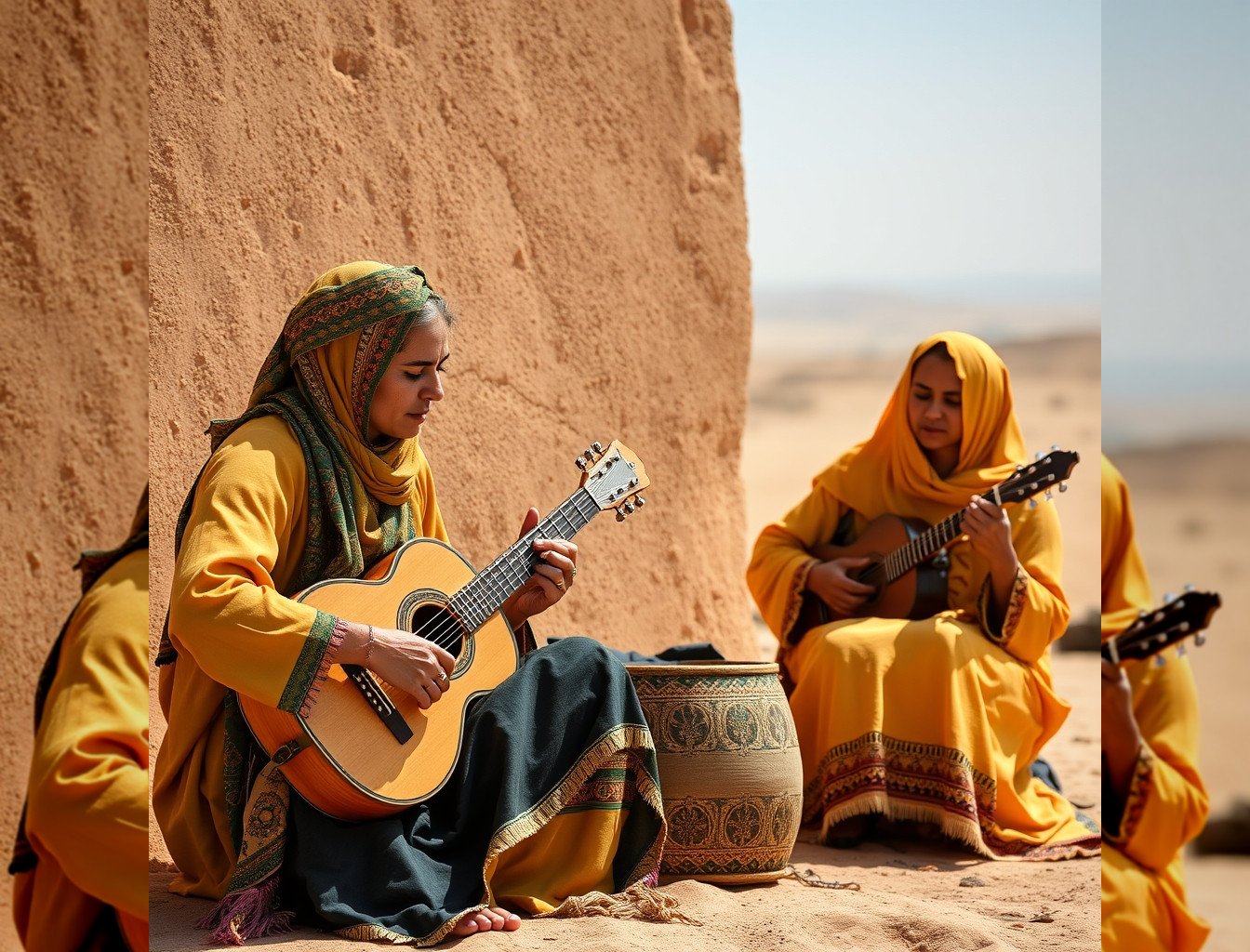
In the southern Algerian city of Tamanrasset, a centuries-old musical tradition is experiencing a quiet renaissance. According to Ahram Online, Tuareg women are reviving the Tende, a women-only percussion and vocal performance that had nearly faded from public memory. The revival is not just cultural—it is opening new economic pathways for female entrepreneurs in Algeria’s remote Saharan regions.
The Tende tradition, rooted in the Ahaggar Mountains, was historically performed during celebrations like weddings and harvests. Women would gather around a large mortar (tende), striking its sides with sticks while singing in Tamasheq, the Tuareg language. Over time, urbanization, migration, and the decline of traditional gatherings pushed the practice to the margins. But in recent years, local women have begun reclaiming the art form, turning it into a source of income and community pride.
At the forefront of this revival is Fatima Ag Alhassane, a musician and cultural organizer in Tamanrasset. She has trained dozens of young women in Tende techniques, blending traditional rhythms with modern influences. “The Tende is more than music—it’s our identity,” Ag Alhassane told Ahram Online. “By teaching it, we preserve our heritage and create opportunities for women who have few other options.” Her workshops, held in community centers and private homes, have attracted participants from across the region, including women from the Algerian diaspora visiting during summer holidays.
The economic impact of this revival is tangible. In Tamanrasset, a city of around 100,000 people, tourism remains underdeveloped, but cultural experiences are gaining traction. Local tour operators have started offering Tende performances as part of their itineraries, charging between 2,000 and 5,000 Algerian dinars (approximately $15 to $38) per group. For the women involved, these performances provide a supplementary income, with some earning up to 10,000 dinars ($75) per month during peak tourist seasons. While modest by urban standards, this income is significant in a region where formal employment opportunities are scarce, particularly for women.
The revival has also sparked interest in artisanal crafts. The tende mortar itself, traditionally made from wood and animal hide, is now being produced for sale. Local artisans, many of them women, are crafting smaller versions of the instrument as souvenirs, priced between 3,000 and 8,000 dinars ($23 to $60). These handmade pieces are sold in Tamanrasset’s markets and through informal networks, including to Algerians living abroad who seek authentic cultural artifacts. The demand has created a niche market, though production remains limited by the availability of raw materials and skilled labor.
For the Algerian diaspora, the Tende revival offers a bridge to cultural roots. Many Algerians in France, Canada, and the Gulf states have expressed interest in supporting the tradition, either by attending performances during visits or by purchasing recordings and instruments. In 2015, a group of Algerian expatriates in Marseille organized a fundraiser to support Ag Alhassane’s workshops, raising over 500,000 dinars ($3,750). While small, such initiatives demonstrate the potential for diaspora engagement in preserving and monetizing intangible heritage.
The Algerian government has taken notice. The Ministry of Culture has included Tende performances in its official programming for national festivals, such as the Tamanrasset International Festival of Saharan Cultures. These events attract thousands of visitors, providing a platform for women musicians to showcase their work. However, bureaucratic hurdles remain. Many women lack formal business registrations, limiting their access to grants or loans. “We need support to professionalize,” said Ag Alhassane. “Right now, we operate on a small scale, but with the right resources, we could expand.”
The revival of Tende also highlights broader trends in Algeria’s cultural economy. As the country seeks to diversify its economy beyond hydrocarbons, sectors like tourism and crafts are gaining attention. In 2023, Algeria’s cultural and creative industries contributed an estimated 2.5% to GDP, according to the Ministry of Culture, a figure that could grow with targeted investment. Traditional music, in particular, is seen as a low-cost, high-impact sector, requiring minimal infrastructure but offering significant social and economic returns.
For entrepreneurs, the Tende revival presents several opportunities. First, there is a growing market for cultural experiences, particularly in underserved regions like the Sahara. Businesses that can package Tende performances with other local attractions—such as guided tours of the Ahaggar Mountains or workshops on Tuareg crafts—could tap into a niche but expanding tourism segment. Second, the demand for handmade instruments and souvenirs suggests potential for scaling production, either through cooperatives or small enterprises. Finally, digital platforms could play a role in connecting Algerian artisans with diaspora markets, though internet access in the south remains a challenge.
The revival is not without its challenges. Climate change has made it harder to source traditional materials, such as the wood used for tende mortars. Additionally, cultural preservation efforts often clash with modernization, as younger generations gravitate toward globalized music and entertainment. Yet, the success of Tende demonstrates that tradition and entrepreneurship can coexist, particularly when women are empowered to lead the way.
Key takeaway for entrepreneurs
The revival of Tende music in Tamanrasset shows how cultural heritage can generate income in Algeria’s remote regions. Women-led initiatives are creating jobs in tourism and crafts, while diaspora interest offers export potential. Entrepreneurs can explore partnerships with local artisans, develop cultural experience packages, or invest in digital platforms to connect traditional products with global markets. The model is replicable for other endangered traditions, provided there is community buy-in and access to basic resources.
💡 Starting a business in Algeria? GlobalStart guides you step by step: procedures, real costs, company forms (SARL, EURL, SPA) and CNRC registration.