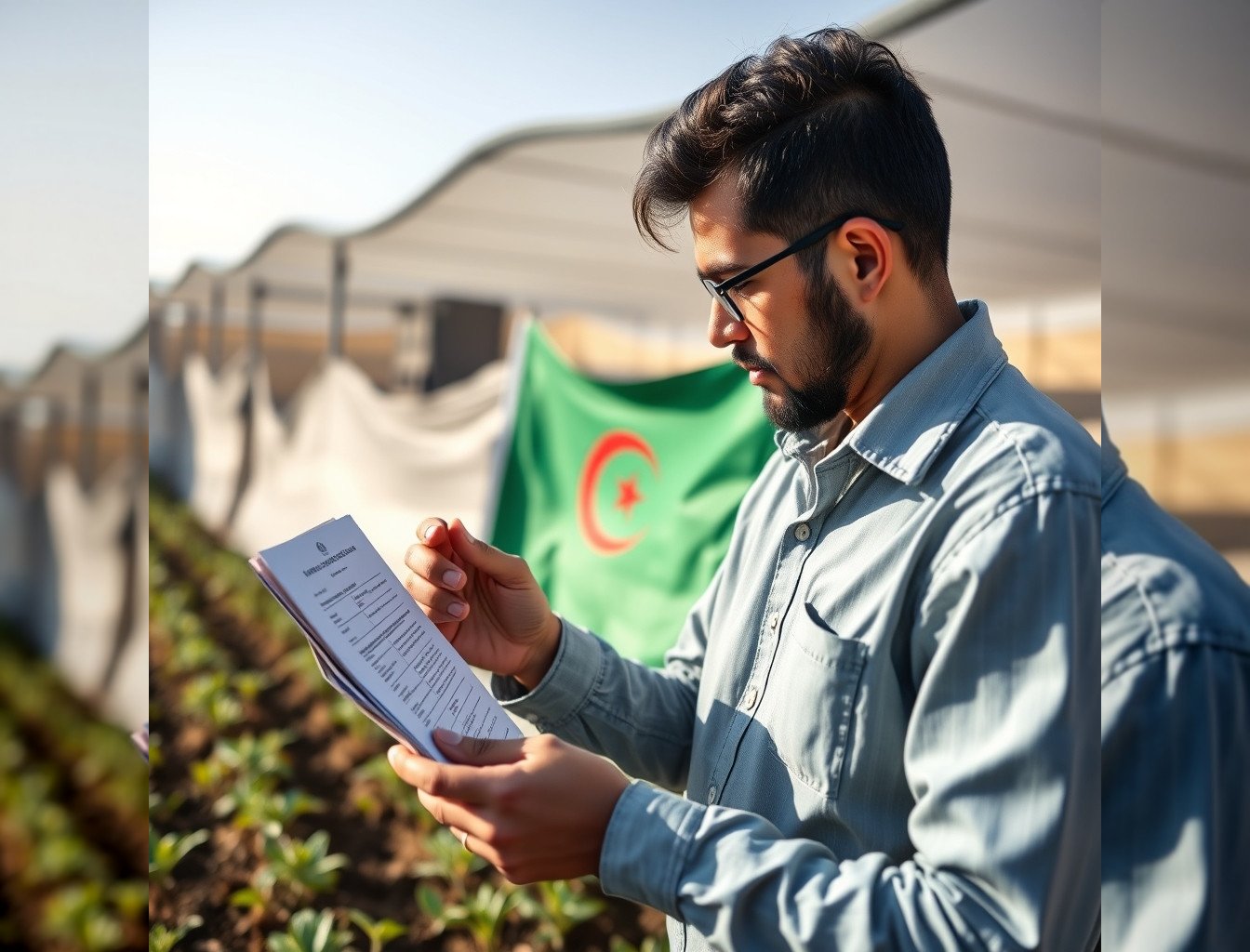
Algeria’s recent decision to exempt agricultural businesses from corporate tax is reshaping the investment landscape for entrepreneurs and the diaspora. The measure, announced by the Ministry of Finance in late 2023 and detailed in the 2024 Finance Law, removes the 26% corporate tax rate for companies engaged in primary agricultural production, processing, and agri-tech. According to the official gazette Journal Officiel, the exemption applies to both new and existing ventures, provided they register with the National Office of Agricultural Statistics (ONSA).
The policy targets three sectors: crop farming, livestock, and agri-food processing. Startups in hydroponics, vertical farming, and organic fertilizers are also eligible, as confirmed by the Ministry of Agriculture in a statement to El Watan. The exemption lasts for five years, with an option to renew for another three if the business meets job-creation targets—at least 10 full-time employees for small enterprises and 50 for larger ones.
For entrepreneurs, the tax break slashes upfront costs. A 2023 report by the Algerian Business Leaders Forum (FCE) estimated that corporate tax accounted for 18% of total expenses for agri-businesses, second only to labor costs. “This is the first time the government has tied tax relief directly to job creation in agriculture,” said FCE president Ali Haddad in a December interview with Liberté. The move aligns with President Abdelmadjid Tebboune’s 2020-2024 economic plan, which prioritizes food security and import substitution—Algeria currently spends $10 billion annually on food imports, per Bank of Algeria data.
The diaspora is taking notice. Remittances from Algerians abroad, which reached $1.8 billion in 2023 according to the World Bank, are increasingly flowing into agri-startups. “We’ve seen a 30% spike in inquiries from France and Canada since the exemption was announced,” said Kamel Benkoussa, founder of Algiers-based venture capital firm Tamwilcom. His firm recently funded Green Horizons, a hydroponic lettuce producer in Oran, which expects to break even within 18 months thanks to the tax savings.
Local banks are adjusting their lending criteria. The Agricultural Bank of Algeria (BADR) now offers loans at 3% interest—down from 7%—for tax-exempt agri-businesses. “We’re processing 50 applications a week, mostly for greenhouses and date processing units,” said BADR director Mohamed Larbi Ould Khelifa in a January interview with El Moudjahid. The bank has earmarked $500 million for such projects in 2024, double last year’s allocation.
Challenges remain. Bureaucratic delays in ONSA registration can stretch to six months, according to a survey by the Algerian Chamber of Commerce (CAC). “The exemption is powerful, but the paperwork is still a hurdle,” said Sarah Meziane, co-founder of AgriTech Solutions, a startup developing drought-resistant seeds in Sétif. Land access is another bottleneck—80% of Algeria’s arable land is state-owned, and leases often require political connections, per a 2023 study by the National Economic and Social Council (CNES).
The policy’s success hinges on enforcement. The General Directorate of Taxes (DGI) has set up a task force to audit compliance, focusing on companies that claim exemptions while engaging in non-agricultural activities. “We’re targeting shell companies that use the exemption to launder profits,” said DGI head Abdelkader Boudiaf in a press conference last month. Penalties include back taxes plus a 40% fine.
For agri-tech startups, the exemption is a game-changer. Smart Farm, a precision agriculture firm in Algiers, used its tax savings to invest in IoT sensors for olive groves. “We’re now exporting data analytics to Tunisia and Morocco,” said CEO Yacine Belkacem. The company’s revenue grew 40% in 2023, and it plans to hire 20 engineers this year.
The diaspora’s role is expanding beyond remittances. Algerian entrepreneurs in Europe are forming joint ventures with local farmers. Mediterranean Agro, a French-Algerian startup, is building a $15 million tomato-processing plant in Mostaganem, leveraging the tax exemption and a $5 million grant from the Algerian Investment Development Agency (ANDI). “The exemption cuts our payback period from seven to four years,” said co-founder Karim Bouzid.
Key takeaway for entrepreneurs
Algeria’s agriculture tax exemption offers a five-year window to launch or scale agri-businesses with lower costs and higher margins. The policy favors startups that create jobs and adopt technology, with banks and VC firms prioritizing these sectors. However, securing land and navigating registration delays require local partnerships or legal expertise. For the diaspora, this is an opportunity to invest in import-substitution industries with state-backed incentives.
Sources
- Medafrica Times
💡 Starting a business in Algeria? GlobalStart guides you step by step: procedures, real costs, company forms (SARL, EURL, SPA) and CNRC registration.