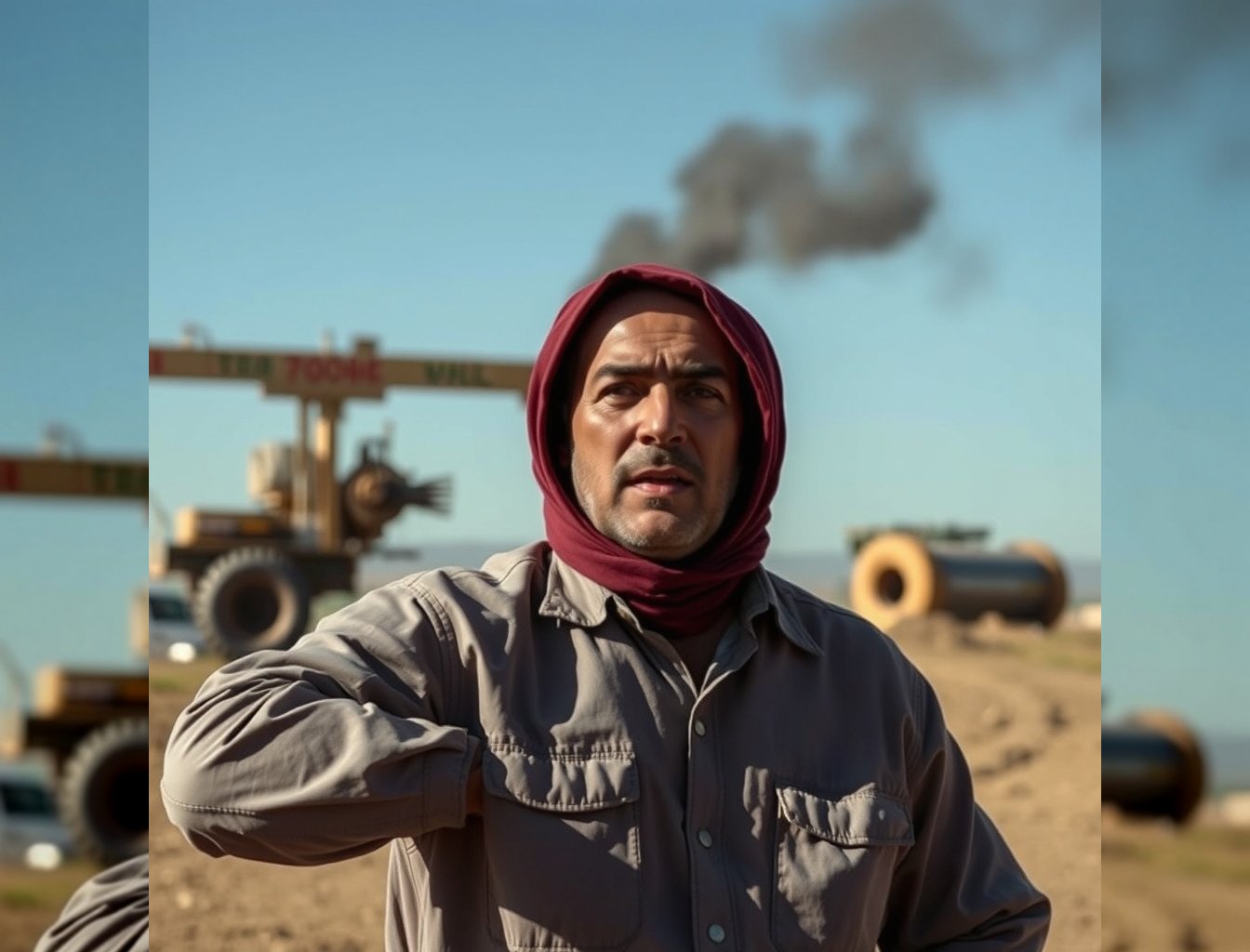
This week saw Algeria advance energy infrastructure while facing domestic unrest over water shortages. Foreign investment in hydrocarbons and agriculture grew, but long-term gas contracts limited revenue gains from price surges. Trade ties with sub-Saharan Africa strengthened, though protests over governance continued. Entrepreneurs and investors should note shifts in energy policy, agricultural partnerships, and regional electricity projects.
Energy: Gas pipeline progress, missed price surges
Algeria broke ground on the Trans-Saharan Gas Pipeline (TSGP), a $13 billion project to transport Nigerian gas to Europe via Niger and Algeria. The 4,128 km pipeline aims for completion by 2030, with capacity of 30 billion cubic meters (bcm) annually. Algeria’s state-owned Sonatrach leads the project, partnering with Nigeria’s NNPC and Niger’s government.
Despite global gas price spikes, Algeria missed revenue opportunities due to long-term contracts with European buyers. Prices in spot markets reached $50/MMBtu in 2022, while Algeria’s fixed contracts averaged $12–15/MMBtu. Sonatrach reported $50 billion in hydrocarbon revenues in 2022, up 70% year-on-year, but analysts estimate potential gains at $20–30 billion higher under flexible pricing.
The government is reforming hydrocarbon laws to attract foreign investment. Draft amendments include tax incentives for shale gas exploration and reduced state equity requirements in new projects. Algeria holds 707 trillion cubic feet of shale gas reserves, the third-largest globally, but extraction remains limited by water scarcity and regulatory hurdles.
Agriculture: Wheat deals, livestock imports, Italian investment
Algeria’s 2023 wheat and barley harvest forecast was cut by 15% due to drought, according to the Ministry of Agriculture. The country imports 8–10 million tons of wheat annually, mostly from France, Russia, and Canada. Domestic production covers 20–30% of demand.
Kenya signed a deal to export 500,000 sheep to Algeria ahead of Eid al-Adha, worth an estimated $100 million. Algeria imports 3–4 million live sheep yearly for the holiday, with suppliers including Spain, Romania, and Australia.
An Italian firm, Bonifiche Ferraresi, signed a $455 million contract to develop 50,000 hectares of farmland in Algeria’s El Oued and Biskra regions. The project focuses on cereal and olive production, with a target of 500,000 tons of wheat and 100,000 tons of olive oil annually by 2028. The deal includes irrigation infrastructure and export logistics.
Water stress: Riots, desalination expansion
Protests erupted in Ouargla, Laghouat, and Tiaret over water shortages. Residents blocked roads and burned tires, demanding 24/7 water access. The government deployed 1,200 tanker trucks to affected areas and announced $2 billion in emergency infrastructure spending.
Algeria’s Hamma Seawater Desalination Plant received the OPIC Impact Award for critical infrastructure. The plant, operated by Hyflux (Singapore), produces 200,000 cubic meters of water daily, supplying 20% of Algiers’ needs. The government plans to build 13 new desalination plants by 2030, with a combined capacity of 2 million cubic meters/day.
Trade and regional ties: Pipeline diplomacy, electricity exports
Algeria ranked among three African countries with near-100% electricity and gas coverage, per the African Energy Commission (AFREC). The country exports 5–7 bcm of gas annually to Tunisia and Morocco, though Morocco halted imports in 2021 amid diplomatic tensions.
The Trans-Saharan Gas Pipeline (TSGP) positions Algeria as a gas transit hub for sub-Saharan Africa. The project includes compressor stations in Niger and Algeria, with potential to supply West African markets before reaching Europe.
Algeria aims to install 15 GW of solar capacity by 2035, up from 500 MW currently. The Solar 1000 program targets 1 GW/year from 2024, with $10 billion in planned investments. Foreign firms, including TotalEnergies and Masdar (UAE), are bidding for projects.
Foreign investment: Hydrocarbons, agriculture, arts
Algeria’s new hydrocarbon law reduces Sonatrach’s mandatory 51% stake in exploration projects to 20%, with tax breaks for deepwater and shale gas. The government expects $50 billion in foreign investment by 2030, up from $12 billion in 2022.
In agriculture, Bonifiche Ferraresi’s $455 million deal marks Italy’s largest investment in Algerian farming. The project includes solar-powered irrigation and export-oriented processing facilities.
The Oran Arab Film Festival and Algiers Symphonic Music Festival attracted 200+ international participants, including French and Moroccan producers. Algeria’s tourism sector saw a 30% increase in bookings in 2023, with Oran ranked 7th in The New York Times’ top destinations.
Governance: Protests, media crackdowns
Algerian authorities detained 12 journalists in June, per Amnesty International. Charges include “undermining national unity” and “spreading false information.” Protests in Algiers, Oran, and Béjaïa demanded economic reforms and political freedoms.
The government blocked access to news sites including Tout sur l’Algérie (TSA) and Algerie Part. Police deployed water cannons and tear gas to disperse crowds in Algiers’ Grande Poste square.
Diaspora and soft power: Sports, cinema, literature
Algerian boxer Imane Khelif won gold at the 2023 IBA Women’s World Boxing Championships, but her victory sparked gender eligibility debates. The International Olympic Committee (IOC) defended her participation, citing medical and legal compliance.
French director François Ozon’s adaptation of Camus’ The Stranger premiered at Cannes Film Festival, reigniting debates over post-colonial memory. Algerian films, including Mounia Meddour’s Papicha, secured $1.2 million in European distribution deals in 2023.
Algeria’s 16-athlete squad for the 2023 Arab Games includes Olympic medalist Taoufik Makhloufi (athletics) and footballer Riyad Mahrez, who joined Al-Ahli Saudi FC in a $30 million transfer.
Week’s balance: Progress and pressure points
Energy: Pipeline construction began; hydrocarbon law reforms aim to attract $50 billion in FDI. Missed gas price surges cost $20–30 billion in potential revenue.
Agriculture: Wheat harvest cut by 15%, but $455 million Italian farming deal and Kenyan livestock imports signal sector growth.
Water: $2 billion emergency spending after riots; desalination capacity to double by 2030.
Regional ties: TSGP pipeline and 15 GW solar plan strengthen sub-Saharan links. Electricity coverage reaches 99%.
Governance: 12 journalists detained; protests met with police crackdowns.
Diaspora: Khelif’s gold medal and Ozon’s film highlight Algeria’s cultural influence, while Mahrez’s transfer underscores football’s economic role.
Key takeaway for entrepreneurs:
Algeria’s hydrocarbon reforms and agricultural deals offer entry points for foreign investors, but water scarcity and regulatory risks remain. The $455 million Italian farming project and 15 GW solar plan present opportunities in agribusiness and renewables. Diaspora networks can leverage cultural exports (film, sports) for branding and partnerships.
Sources
- The Eastleigh Voice
- World Grain
- Amnesty International
- Reuters
- aps.dz
- 3 Wire Sports
💡 Starting a business in Algeria? GlobalStart guides you step by step: procedures, real costs, company forms (SARL, EURL, SPA) and CNRC registration.