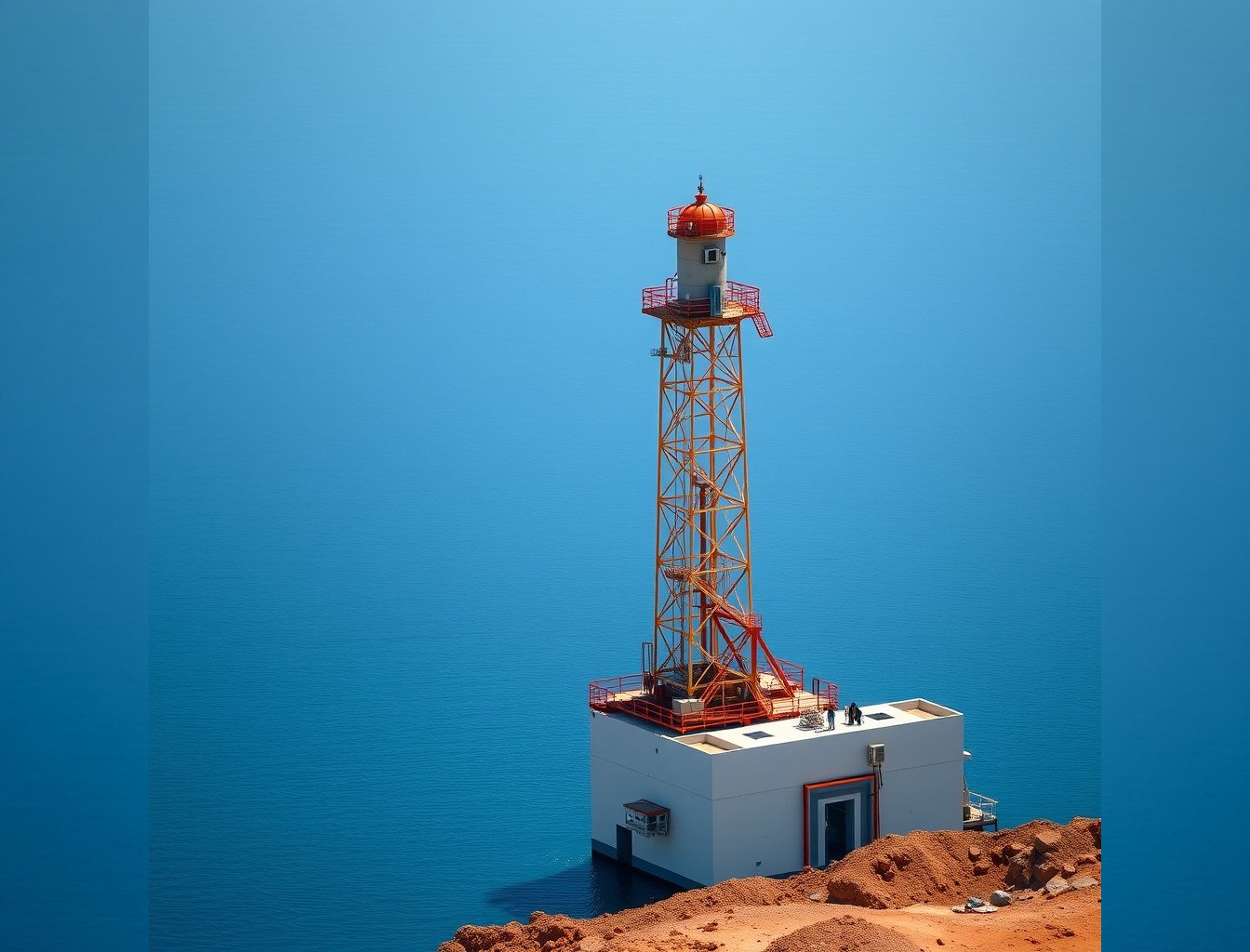
Algeria’s recent pivot to Mediterranean offshore exploration marks one of the boldest gambles in the country’s energy history—a move that could reshape not only its own economic future but also the opportunities available to local entrepreneurs and the Algerian diaspora.
The push comes as state-owned energy giant SONATRACH embarks on a new licensing round for seven offshore blocks in the Western Mediterranean, an area geologists estimate holds at least 30 trillion cubic feet of natural gas. According to APS, the tender, launched in late 2024, has already attracted interest from major international players including TotalEnergies, Eni, and Repsol. While official bids are still under review, industry analysts suggest winning consortia could be announced within months.
The timing couldn’t be more strategic. Algeria’s gas production has stagnated in recent years due to declining output from mature onshore fields like Hassi R’Mel. The government, under President Abdelmadjid Tebboune, has made energy diversification a cornerstone of its economic recovery plan. “We are not just looking for more gas,” said Energy Minister Mohamed Arkab in a televised statement earlier this year. “We are looking for partners who can bring technology, capital, and speed.”
For Algerian entrepreneurs, the offshore push opens several concrete avenues. First, local service providers—especially those in maritime logistics, engineering, and subsea technology—stand to benefit from spillover contracts. SONATRACH has already signaled plans to prioritize domestic firms in procurement for pre-drilling surveys and port services. Companies like Algerian maritime logistics firm Serimpex and engineering consultancy CETIM have reportedly pre-qualified for tender packages worth over $200 million in the first phase.
Second, the energy transition narrative is creating new niches. With global buyers increasingly favoring low-carbon gas, Algeria’s offshore fields could attract premium pricing—especially if paired with carbon capture pilots. Entrepreneurs in renewables integration, such as Oran-based EPC contractor Cegelec Algeria, are exploring partnerships to supply modular hydrogen or CCUS solutions for future gas processing hubs.
Third, the diaspora can play a direct role through investment and knowledge transfer. Since 2023, Algeria has allowed dual nationals to own up to 49% in energy service companies without prior residency. “There’s real appetite from the diaspora to back spin-off firms in energy tech and digital monitoring,” said Farid Yaker, founder of Paris-based Algerian Energy Network. He points to recent deals where diaspora-led funds invested in Algerian startups developing AI-driven seismic interpretation tools for offshore exploration.
But the road is not without hurdles. Environmental groups, including Greenpeace North Africa, have warned that deep-water drilling risks damaging marine ecosystems in the Alboran Sea. SONATRACH has countered by announcing a $15 million environmental impact monitoring program to be managed in partnership with local universities. Still, delays from legal challenges or ecological reviews could push first gas from new fields past 2027.
For entrepreneurs eyeing opportunities, the message is clear: act now. The tender window for the seven blocks closes in June 2025, with qualification rounds already underway. Local firms must prepare detailed technical bids and secure financing, often through Algerian banks like BADR or Al Baraka, which have recently launched dedicated energy transition credit lines.
Key takeaway for entrepreneurs
Algeria’s offshore gas push offers near-term contracts for local logistics, engineering, and tech firms, with SONATRACH prioritizing domestic suppliers in pre-drilling and support roles. The diaspora can invest up to 49% in energy service companies and should target spin-off sectors like CCUS and AI-driven energy tech to align with global decarbonization trends. Tender deadlines are tight, and environmental compliance is non-negotiable, requiring early preparation and partnerships with local research institutions.
Sources
- Carnegie Endowment for International Peace
- The Arab Weekly
- AL24 News
- Arab Reform Initiative
- Forbes
💡 Starting a business in Algeria? GlobalStart guides you step by step: procedures, real costs, company forms (SARL, EURL, SPA) and CNRC registration.