This week’s developments in Algeria span infrastructure expansion, economic warnings, security operations, and sector-specific shifts. The government advanced transport and energy projects while the IMF highlighted structural economic weaknesses. Tourism and food security faced setbacks. Entrepreneurs and investors saw new opportunities in mining, energy, and construction, but regulatory and macroeconomic risks persisted.
Infrastructure and transport: rail and energy projects advance
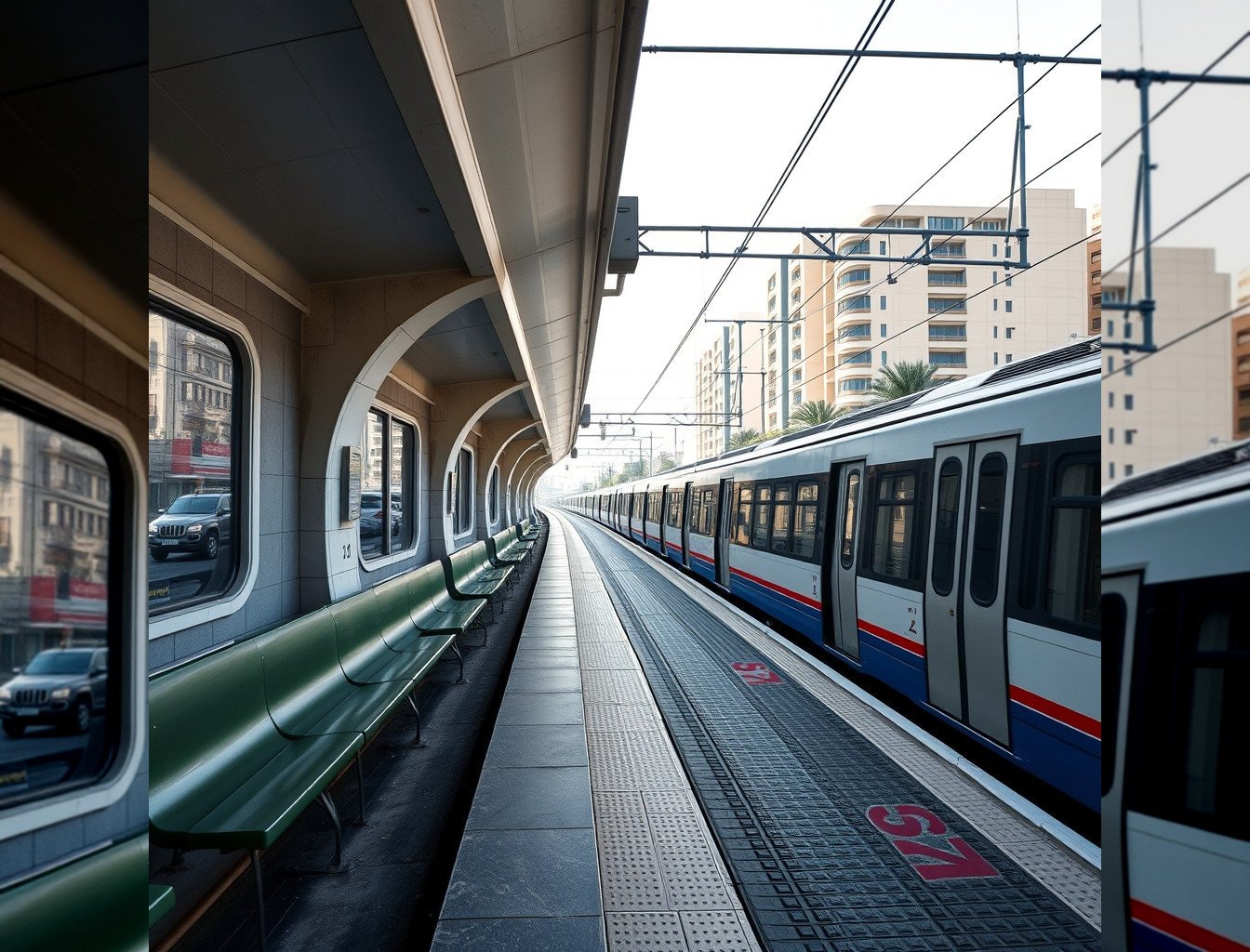
Algeria’s government prioritized large-scale transport and energy infrastructure. On 10 June, President Abdelmadjid Tebboune inaugurated the Western Mining Railway, a heavy-haul line designed to transport iron ore from Gara Djebilet to Béchar. The 950km project, developed by Algerian Rail (SNTF) and Chinese contractors, aims to boost annual ore exports to 10 million tonnes by 2025. The first 495km phase received €747 million in funding, with completion expected in 2026.
Separately, the Ministry of Transport approved a $2 million grant from the Middle East and Central Asia Development Fund (MCDF) for Algerian, Egyptian, and Kazakhstani projects. The funds target feasibility studies for regional rail and logistics hubs.
In energy, Algeria announced three new oil and gas discoveries in the Berkine and Illizi basins, confirmed by state-owned Sonatrach. The finds include 1.2 trillion cubic feet of gas and 50 million barrels of condensate. Sonatrach plans to invest $40 billion in exploration and production by 2027, with a focus on unconventional reserves.
Qatar’s QGIRCO also secured approval for a $1.5 billion combined-cycle gas turbine (CCGT) plant in Skikda, part of Algeria’s plan to add 5 GW of power capacity by 2030. The project aligns with China’s involvement in Algeria’s energy sector, including a $6 billion deal signed in March for solar and hydrogen initiatives.
IMF warns on economic stagnation and diversification gaps
The International Monetary Fund (IMF) released a report on 12 June identifying structural failures in Algeria’s economic management. The IMF noted that GDP growth, projected at 3.8% in 2024, relies on public spending and hydrocarbon revenues, with no measurable impact on private-sector activity or living standards. Inflation reached 9.1% in May, driven by food and fuel subsidies.
The Fund recommended reducing fiscal deficits, currently at 12% of GDP, and accelerating diversification beyond hydrocarbons. Algeria’s non-oil exports accounted for only 3% of total exports in 2023, down from 5% in 2019. The report cited rigid labor laws, bureaucratic hurdles, and limited access to finance as barriers to private investment.
The government responded by announcing a $5 billion stimulus package for small and medium enterprises (SMEs), including tax exemptions for startups in agribusiness, renewable energy, and digital services. The package also includes $1.2 billion in loan guarantees for exporters.
Tourism and hospitality: regulatory risks and expansion plans
Algeria’s tourism sector faced contrasting developments. On 14 June, a court sentenced two men to seven years in prison for “desecrating” the national flag in a luxury hotel in Oran. The incident, filmed and shared on social media, led to the temporary closure of the hotel and a review of security protocols in hospitality venues. The Ministry of Tourism reported a 30% drop in bookings at high-end hotels in June compared to May.
Despite the setback, the government reiterated its goal to attract 5 million tourists annually by 2030, up from 2.4 million in 2023. The National Tourism Office (ONT) launched a $200 million campaign to promote coastal and desert destinations, targeting European and Gulf markets. The campaign includes visa facilitations for citizens of Saudi Arabia, Qatar, and the UAE.
QGIRCO’s Skikda project includes a $300 million luxury resort, part of a broader $2 billion hospitality investment plan. The company also announced a partnership with Accor to manage three hotels in Algiers and Oran by 2026.
Security and counterterrorism: persistent threats
Algeria’s military conducted operations against Al-Qaeda in the Islamic Maghreb (AQIM) in the mountainous regions of Kabylie and Tamanrasset. The Ministry of Defense reported the neutralization of 12 militants in June, including three in a raid near Tizi Ouzou on 11 June. AQIM’s activities remain limited to smuggling and small-scale attacks, but the group retains influence in remote areas.
The operations coincide with Algeria’s efforts to position itself as a mediator in the Sahel. Mali’s recent political instability, including the junta’s withdrawal from the Economic Community of West African States (ECOWAS), has complicated Algeria’s role. The government has proposed a $50 million fund to support regional security initiatives, but no commitments have been secured from Sahelian states.
Food security: climate risks and demographic shifts
Algeria declared three days of national mourning after forest fires in Bejaia and Tizi Ouzou killed 12 people and destroyed 8,000 hectares of forest. The fires, linked to high temperatures and arson, disrupted agricultural production in the region. The Ministry of Agriculture estimated losses at $45 million, primarily in olive and fruit orchards.
The government approved a $1.8 billion climate resilience plan for forests, including firebreaks, early-warning systems, and reforestation. The plan targets 1 million hectares by 2027, with funding from the African Development Bank and the European Union.
Separately, a report by HESPRESS highlighted long-term demographic shifts in North Africa, including Algeria. Fertility rates fell from 3.2 children per woman in 2000 to 2.4 in 2023, reducing pressure on food demand but raising concerns about labor shortages. The government has responded with incentives for agricultural startups, including tax breaks and subsidized loans for hydroponic and vertical farming.
Football and sports: regulatory changes and market shifts
Algeria’s football federation (FAF) banned clubs from hiring foreign players starting in the 2024-25 season. The decision aims to develop local talent but has drawn criticism from clubs reliant on foreign recruits. The ban does not apply to Algerian players with dual citizenship.
In the transfer market, RB Leipzig denied reports of a €20 million bid for Algerian forward Mohamed Amoura. Amoura, 22, scored 12 goals for Union Saint-Gilloise in the Belgian league last season. Meanwhile, South African coach Rulani Mokwena agreed to a two-year contract with Libyan club Al-Ittihad after leaving MC Alger.
The U17 Africa Cup of Nations saw Algeria’s team advance to the quarterfinals with a 2-0 win over Somalia. The tournament, hosted in Algeria, has drawn attention to the country’s youth development programs, which receive $30 million annually from the Ministry of Youth and Sports.
China’s expanding role in Algeria’s economy
China strengthened its economic ties with Algeria through energy and mining projects. Algeria’s Gara Djebilet iron ore mine, developed with Chinese partners, is expected to supply 10% of China’s annual iron ore imports by 2028. The project includes a $1.2 billion rail link to the port of Béchar, financed by China’s Eximbank.
In energy, Algeria launched a 1.2 GW CCGT plant in Skikda, built by China Energy Engineering Group (CEEC). The project, part of a $6 billion energy deal, will use Algerian gas and supply electricity to Tunisia and Morocco under regional grid agreements.
China’s investments in Algeria totaled $7.5 billion in 2023, up from $4.2 billion in 2020. The focus remains on infrastructure, hydrocarbons, and renewable energy, with limited engagement in Algeria’s non-oil private sector.
Balance of the week
Algeria advanced key infrastructure projects, including the Western Mining Railway and QGIRCO’s Skikda plant, signaling continued state-led investment in transport and energy. The IMF’s warnings on economic stagnation and the tourism sector’s regulatory risks highlighted persistent challenges for private-sector growth. Security operations against AQIM and climate-related disruptions in agriculture underscored operational risks for businesses. China’s expanding role in Algeria’s economy provided new opportunities but reinforced dependence on state-backed deals.
Key takeaway for entrepreneurs
Algeria’s infrastructure projects create immediate opportunities in construction, logistics, and energy services, but macroeconomic instability and regulatory risks remain high. The $5 billion SME stimulus offers financing options for startups in agribusiness and renewables, while China’s investments may open supply-chain roles for local firms. Tourism and hospitality face regulatory uncertainty, requiring compliance with security and cultural protocols.
Sources
- Council on Foreign Relations
- PBS
- Insight News
- Modern Ghana
- sports.yahoo.com
- Al Jazeera
💡 Starting a business in Algeria? GlobalStart guides you step by step: procedures, real costs, company forms (SARL, EURL, SPA) and CNRC registration.