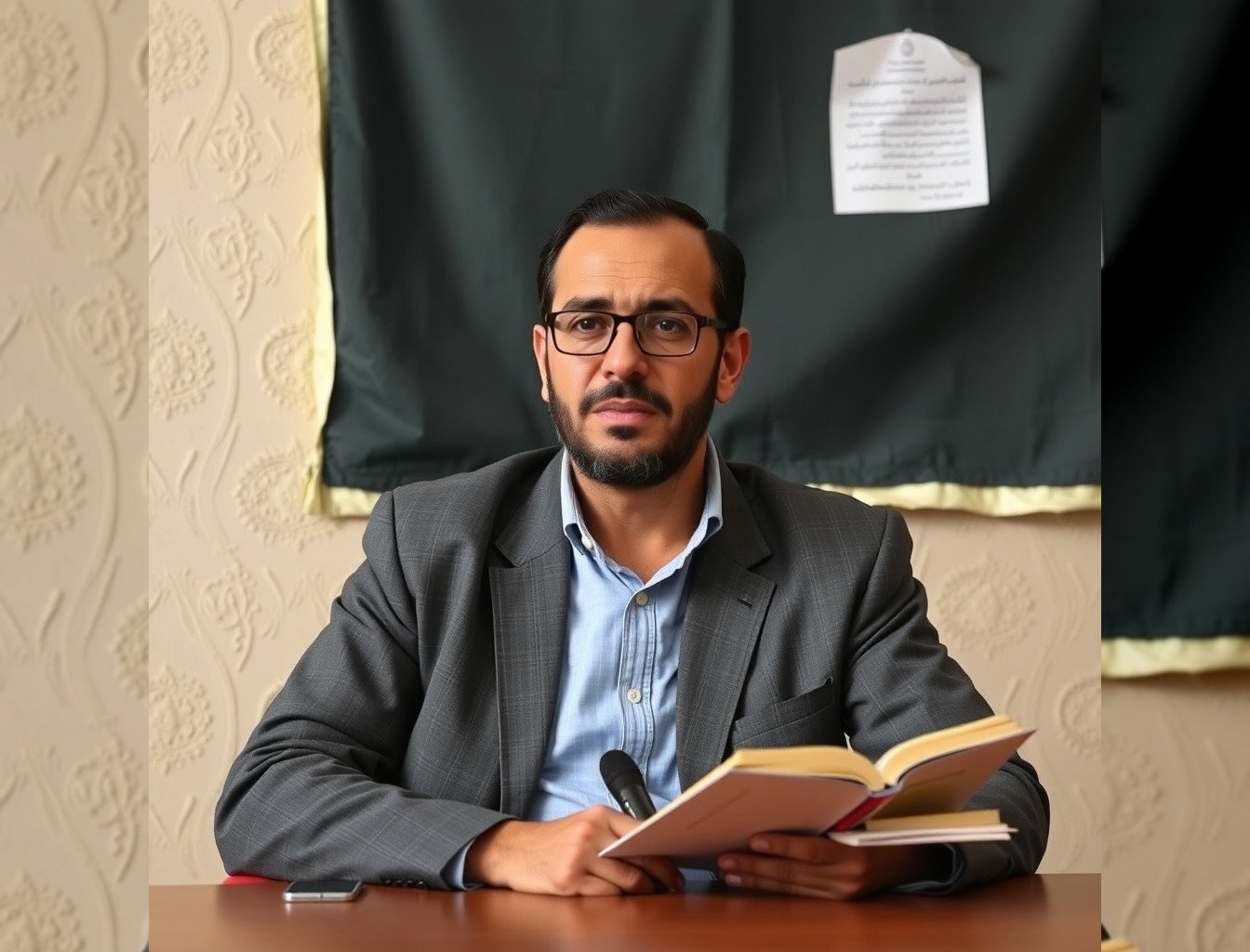
Algerian-French author Kamel Daoud was recently sentenced in absentia to three years in prison by an Algiers court over his 2025 novel Houris, according to reports by the Washington Times and France 24. The ruling, handed down in April 2026, stems from charges of “offending Islam” and “undermining national unity,” legal grounds that have increasingly targeted creative expression in Algeria. Daoud, whose 2014 novel The Meursault Investigation won the Prix Goncourt du Premier Roman, has lived in self-imposed exile in France since 2019 after receiving death threats from conservative groups.
The verdict arrives amid a broader crackdown on literary and artistic freedoms in Algeria. In November 2024, the Algiers International Book Fair excluded Daoud from its guest list, despite his status as Algeria’s most internationally recognized contemporary writer. The fair’s organizers, linked to the Ministry of Culture, did not issue a public statement, but local media cited “administrative reasons” for the omission. Daoud’s absence followed the 2024 Prix Goncourt win by Algerian novelist Leïla Sebbar for Les Ombres de la Casbah, a book exploring the Algerian Civil War. Sebbar’s award was met with official silence from Algerian authorities, a pattern that contrasts with the government’s usual celebration of cultural achievements abroad.
The legal case against Daoud centers on Houris, a novel that reimagines Quranic figures through a modern, critical lens. The book, published in French by Éditions Actes Sud, was shortlisted for the Prix Renaudot but never distributed in Algeria. In January 2026, a group of Algerian lawyers affiliated with the National Union of Algerian Lawyers (UNA) filed a complaint against Daoud, arguing that the novel “distorts religious texts” and “promotes atheism.” The court’s decision to proceed with the case—despite Daoud’s absence—has drawn condemnation from international literary organizations, including PEN International and the French Publishers Association (SNE), which called the ruling “a dangerous precedent for artistic freedom in the Maghreb.”
For Algeria’s literary ecosystem, the sentence carries economic and reputational risks. The country’s publishing sector, valued at approximately $45 million in 2025, relies heavily on state funding and private sponsorships from companies like Sonelgaz and Air Algérie. However, the sector employs fewer than 2,000 people directly, with most publishers operating on thin margins. The exclusion of high-profile authors like Daoud and Sebbar from official events discourages private investment in local publishing, which already struggles with distribution challenges and piracy. In 2025, only 12% of books sold in Algeria were by Algerian authors, according to the National Book Center (CNL).
The diaspora’s role in Algeria’s literary economy is also at stake. Remittances from Algerians abroad, which totaled $2.1 billion in 2025, often fund cultural projects, including independent publishing houses in Oran and Constantine. Daoud’s case may deter diaspora entrepreneurs from backing literary ventures, fearing legal or social backlash. Meanwhile, Algerian writers in exile, such as Boualem Sansal—who was elected to the Académie française in January 2026 after serving a six-month prison sentence in Algeria—are increasingly turning to European markets. Sansal’s 2025 novel Le Village de l’Allemand, published by Gallimard, sold 80,000 copies in France but was banned in Algeria.
The government’s stance on literature contrasts with its broader economic ambitions. President Abdelmadjid Tebboune’s 2025-2027 economic plan emphasizes “cultural industries” as a growth sector, with a target of creating 5,000 jobs in publishing and media by 2027. Yet the crackdown on writers undermines these goals. In 2025, Algeria’s creative industries contributed just 0.8% to GDP, compared to 3.4% in Morocco and 2.7% in Tunisia, according to the African Development Bank (AfDB). The discrepancy reflects Algeria’s reliance on hydrocarbons, which still account for 95% of export revenues, but also its reluctance to diversify into high-value cultural exports.
For entrepreneurs in the creative sector, the message is clear: state approval is a prerequisite for market access. Independent bookstores in Algiers and Annaba report that titles deemed controversial by authorities are often removed from shelves without explanation. In 2025, the Ministry of Culture revoked the license of Éditions Barzakh, a leading independent publisher, after it released a novel critical of the 1990s civil war. Barzakh’s founder, Selma Hellal, relocated to Marseille, where she now runs a small press focused on Maghrebi literature.
The diaspora’s response has been mixed. Some, like the Algerian-American entrepreneur Karim Amrani, have launched crowdfunding campaigns to support jailed writers. Amrani’s 2025 initiative, Livres Sans Frontières, raised $150,000 to fund legal defenses and translations for Algerian authors. Others, however, are shifting focus to less politically sensitive genres, such as children’s literature or technical manuals, which face fewer regulatory hurdles.
Key takeaway for entrepreneurs
Algeria’s literary crackdown creates a high-risk environment for creative industries, particularly for those reliant on state partnerships or local distribution. Entrepreneurs should factor in legal and reputational risks when investing in publishing or media, and consider diaspora markets as safer alternatives. The sector’s growth potential remains tied to broader economic reforms, but current policies favor compliance over innovation.
Sources
- Washington Times
- Publishing Perspectives
- France 24
- Brittle Paper
- BBC
💡 Starting a business in Algeria? GlobalStart guides you step by step: procedures, real costs, company forms (SARL, EURL, SPA) and CNRC registration.